The spaces that inhabit our minds
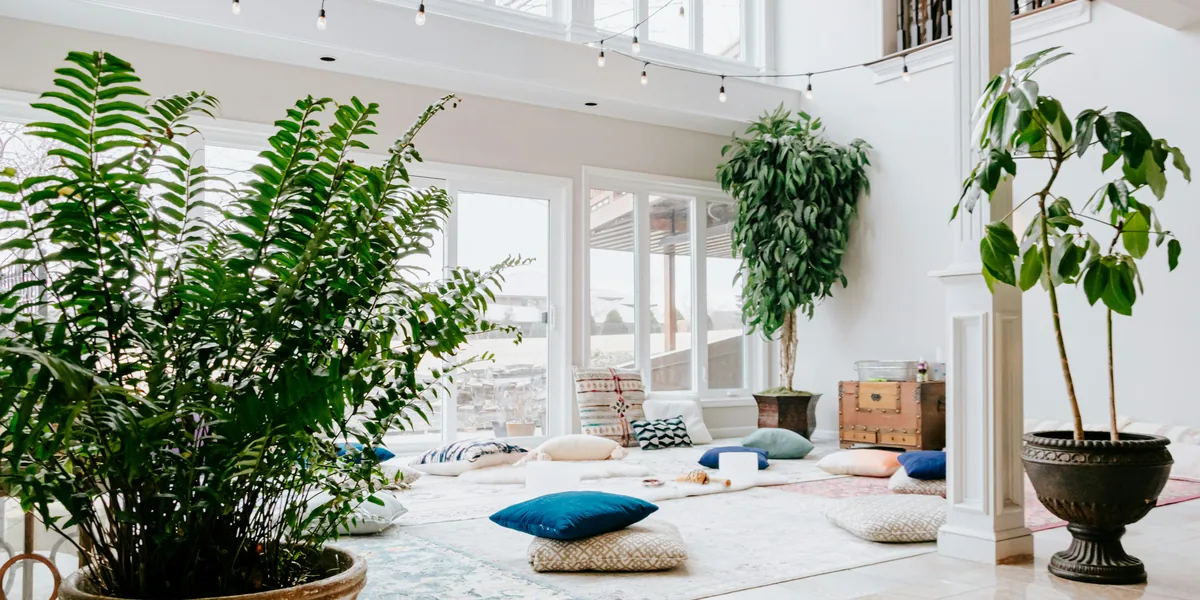
A social and healthcare worker describes how order, care and openness in shared spaces become part of the helping relationship in mental health settings.
Social and healthcare workers know a place of care at every hour of the day and in every corner. Mario Cirillo started from an article by Maria Pia Amore and Raffaele Avico (2019) on the shift from an architecture «for care» to an architecture «that heals», and on Peppe Dell'Acqua's idea of a mental health centre as «a place of transit, a square, a market» (Dell'Acqua & D'Autilia, 2017, as cited in Amore & Avico, 2019; Starry Mind Academy translation). We asked him to tell us what he sees and experiences every day in the spaces where he works: his answers became this reflection.
At the start of a shift
When I start my shift, I try to sense the atmosphere straight away. I look at the spaces, the faces, the small signals that often say more than words. Sometimes it takes very little to tell whether a day is starting calmly or whether someone is carrying a restlessness they struggle to express.
Caring for the space is already care
I believe that places, too, have a voice. A tidy room, a table set with care, a welcoming space can convey warmth and security. That is why, in my work as a care worker, cleaning, tidying and preparing the rooms is not just a task: it is a concrete way of caring for people, of letting them feel that someone is paying attention even to the small things.
I think of the table where people gather to eat together. It is not only a place to have a meal, but a space to meet, exchange a glance, feel part of something. Because sometimes it is the simplest gestures that break the silence and bring people closer.
Bridges, not barriers
I would like every facility to be increasingly open to the outside world, able to build bridges rather than barriers, to look after people without cutting them off from life. Those who need care do not stop having wishes, relationships and the need to feel part of society.
If I could change something, I would make the shared spaces warmer and more homely, less impersonal. I would like everyone who passes through them to feel that they are in a place where they are welcomed, respected and recognised.
After all, I believe that spaces also inhabit our minds: they are bound up with our memories, our fears and our sense of safety. A place can make us feel alone or less alone, invisible or important.
This is what I try to remember in my work: caring for a space also means caring for what a person feels when they live in it. Because care does not only come through what we do, but also through the way we do it. And sometimes a small gesture, a welcoming space or a quiet presence can convey something essential: «You are here, I see you, and you matter.»
English translation by Starry Mind Academy, reviewed and approved by the author. Read the original Italian version.
References
- Amore, M. P., & Avico, R. (2019, September 16). Architettura e psichiatria: luoghi che curano [Architecture and psychiatry: Places that heal]. Psicologia Fenomenologica. https://www.psicologiafenomenologica.it/architettura-psichiatria-luoghi-che-curano/
Mario Cirillo
Social and healthcare worker in mental health
Mario Cirillo is a social and healthcare worker (in Italian, operatore socio-sanitario, OSS) in mental health. He loves his work and keeps training so that he can support the people in his care as well as possible. A keen reader, he believes in the value of the helping relationship and in making every resident feel at ease, and he enjoys sharing his perspective on these topics.
Column · Sguardi Educativi
Sguardi Educativi (Educational Perspectives) is the Starry Mind Academy space for the voices of education and care professionals: experiences, practices and reflections that broaden our view of the complexity of educational processes.
Are you an education or care professional and would you like to propose a contribution? Write to us.
Contribution subject to editorial review. The opinions expressed are those of the author and do not necessarily reflect the position of Starry Mind Academy. How we work