Listening to include: the voice of the child across school, services and community
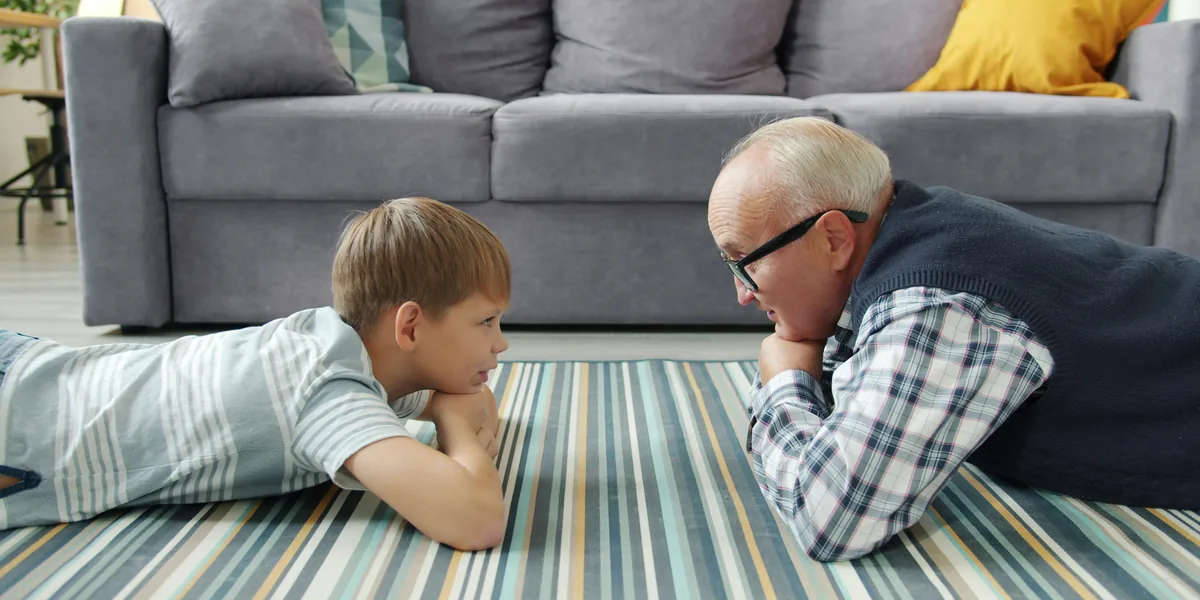
A contribution to our column Sguardi Educativi (Educational Perspectives), written for teachers, educators, social workers and anyone working in services for children and young people. It reflects on what it means to truly listen to a child or a young person, and why listening is not an act of courtesy but a condition for inclusion.
When we talk about children and young people, we tend to focus on their needs, the difficulties they face and the responses adults and services can offer. But before asking what a child needs, we should ask ourselves: are we really listening to them?
Listening does not simply mean letting them speak. It means recognising them as a person, with their own story, emotions, wishes and ability to express their point of view, in keeping with their capacity for discernment.
The foundation: Article 12
This principle is grounded in Article 12 of the UN Convention on the Rights of the Child, which recognises the child's right to express their views freely in all matters affecting them and to be heard.
As Laura Lundy points out in her article «Voice» is not enough (2007), however, giving children a voice is not sufficient: they need an appropriate space, adults who are genuinely willing to listen, and the assurance that their point of view will actually be taken into account.
A recent systematic review by McCafferty and Mercado García (2024) likewise highlights the importance of the quality of the relationship between child and professional, and of the context in which participation takes place.
The risk of talking about the child without talking with them
In educational and social services, then, the risk is talking about the child without really talking with them. Schools, families, educational and social care services and the wider community should instead build a network able to listen to them, recognise their strengths and support them along their path.
At school, for example, a child who behaves oppositionally or constantly seeks attention might simply be labelled "problematic". But behind that behaviour there may be a need to feel heard, seen and acknowledged: before trying to "correct" the behaviour, we should ask what the child is trying to tell us.
Where listening and inclusion meet
This is where listening and inclusion meet. Being included does not only mean being present, but being able to take part, feeling recognised and having a voice.
As a social worker and a professional in educational services, I believe one of the main challenges is precisely this: not only asking «what does this child need?», but also «what are they telling us?» and «how can we make them an active part of their own journey?».
Because there can be no real inclusion without listening. Listening is an educational and professional responsibility, a tool for protection and participation and, above all, a way of telling every child that their voice matters.
English translation by Starry Mind Academy, reviewed and approved by the author. Read the original Italian version.
References
- Lundy, L. (2007). «Voice» is not enough: Conceptualising Article 12 of the United Nations Convention on the Rights of the Child. British Educational Research Journal, 33(6), 927–942. https://doi.org/10.1080/01411920701657033
- McCafferty, P., & Mercado García, E. (2024). Children's participation in child welfare: A systematic review of systematic reviews. The British Journal of Social Work, 54(3), 1092–1108. https://doi.org/10.1093/bjsw/bcad167
- United Nations General Assembly. (1989). Convention on the Rights of the Child, Art. 12. Official text
Jessica Paternostro
Social worker in health and social care, education and school settings
She is a qualified and licensed social worker with experience in health and social care, education and school settings. Her work has included observing and assessing needs, intake and taking on cases, guiding people towards services, and case management, with a particular focus on promoting autonomy, inclusion and the protection of rights, including children's rights. She has gained experience working in multidisciplinary teams and in helping relationships with children, families and professionals.
She is particularly interested in childhood and adolescence, inclusion and participation, and sees continuing education and professional development as essential tools for growing, engaging with others and keeping an attentive, reflective outlook.
Column · Sguardi Educativi
The Starry Mind Academy space for the voices of education and care professionals: experiences, practices and reflections that broaden our view of the complexity of educational processes.
Are you an education or care professional and would you like to propose a contribution? Write to us.
Contribution subject to editorial review. The opinions expressed are those of the author and do not necessarily reflect the position of Starry Mind Academy. How we work